Research

The Department of Physics and Astronomy at the University of Bern is organised into four institutes and three divisions dedicated to specific fields of research: the Institute of Applied Physics, the Astronomical Institute, the Institute of Theoretical Physics, and the Physics Institute which comprises the Laboratory for High Energy Physics, the division of Climate & Environmental Physics, and the division of Space Research & Planetary Sciences. In order to reflect the interdisciplinary and cross-institutional nature of modern research, several university-wide centres have also been established, including the Albert Einstein Center for Fundamental Physics, the Center for Space and Habitability, and the Oeschger Centre for Climate Change Research.

Institutes and Divisions

Astronomical Institute (AIUB)

The Astronomical Institute of the University of Bern (AIUB) focuses on the realization of global reference systems in space and on Earth, as well as on the motion of natural and artificial celestial bodies within these systems. Its research also encompasses the study of the Sun and of so-called “space weather”. This work enables insights into critical changes and interactions within the Earth–Sun system, addressing questions such as: How rapidly are ice masses in the polar regions melting? How can machine learning be used to predict solar storms? How is the ever-growing population of space debris evolving? The AIUB develops astronomical instruments, operates the observatory in Zimmerwald, and runs several computing centers. As a partner in missions of the European Space Agency (ESA) and NASA, the AIUB analyses astronomical and geodetic observations.

Institute for Theoretical Physics (ITP)

The Institute of Theoretical Physics, University of Bern (ITP) conducts research across a broad range of topics in elementary particle physics, spanning the interactions of hadrons at low energies, processes at particle accelerators and in the early Universe, as well as gravity and string theory. Our current understanding of elementary particles and their interactions is encapsulated in the Standard Model of particle physics, which provides a consistent description of the strong, weak, and electromagnetic interactions within the framework of quantum field theory. A major focus of research at the ITP is the development of new methods in quantum field theory and their application to the precise prediction of processes within the Standard Model and its possible extensions.

Institute for Applied Physics (IAP)

In the field of biomedical photonics, the Institute of Applied Physics (IAP) conducts research on both the development of new methods for analysis, diagnosis, and therapy, as well as the optimization of existing medical techniques. Lasers are unique light sources that provide unprecedented insights into fundamental processes of life. The instrumentation developed for this type of research is of relevance to both basic and applied research, enabling, for example, novel applications in medicine and laser-based material processing. In addition, the IAP develops new instruments and optimizes systems in the microwave range, primarily for the remote sensing of the atmosphere and the environment. The resulting data make it possible to investigate atmospheric processes in greater detail and to gain a deeper understanding of them.

Physics Institute

Laboratory for High Energy Physics (LHEP)

At the Laboratory for High Energy Physics (LHEP), the fundamental properties of elementary particles and their interactions are investigated. Current knowledge of the building blocks of our universe is encapsulated in the Standard Model of particle physics. However, many fundamental questions remain unanswered: Why is there significantly more matter than antimatter? What are dark matter and dark energy? What is the mass of neutrinos? Are there additional fundamental particles? At LHEP, these questions are explored in depth, with a focus on neutron and precision physics at low energies, collider physics, neutrino physics, and medical physics. Experiments are conducted in the laboratories of the University of Bern, at the CERN, at the Paul Scherrer Institute, at the cyclotron accelerator of Inselspital, and at other international research institutes.

Physics Institute

Division Climate and Environmental Physics (CEP)

The Climate and Environmental Physics Division investigates the scientific foundations of climate: What was the climate like in the past? How will it change in the future? What role do humans play? What interactions exist between greenhouse gases, temperature, the circulation of the world’s oceans and atmosphere, the large ice sheets, the biosphere, and the carbon, water and oxygen cycles? To address these questions, the Climate and Environmental Physics Division (KUP) analyses ice cores from Greenland and Antarctica, measures atmospheric composition (for example at the Jungfraujoch research station), studies the water cycle, develops Earth system models, and simulates the climate using high-performance supercomputers. The KUP is part of the interdisciplinary Oeschger Centre for Climate Change Research at the University of Bern.

Physics Institute

Division Space Research & Planetary Sciences (WP)

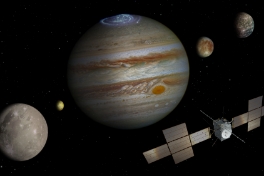
The Space Research and Planetary Sciences Division (WP) investigates the formation and evolution of planetary systems and studies planets, moons, comets, asteroids, and meteorites both within our own Solar System and in extrasolar planetary systems. Research is conducted using space probes, telescopes, laboratory experiments, and theoretical models. The division examines the surfaces, internal structures, and atmospheres of these celestial bodies, as well as the (astro)physical and chemical processes that shape them. It regularly participates in missions organized by major space agencies such as the European Space Agency (ESA) and NASA. Through the CHEOPS mission, the WP division shares responsibility for an entire space mission with the ESA. Researchers in Bern are also among the world leaders in the development of theoretical models and numerical simulations of planetary formation and evolution.